For years, compostable foodware was seen as the best alternative to traditional plastic takeout containers. Today, many colleges and universities are taking another look. Instead of replacing one disposable product with another, they’re investing in plastic-free reuse systems that reduce waste before it’s created, create more resilient dining operations, and eliminate plastic from food contact. Compostables still have an important role, but reuse is increasingly becoming the long-term strategy for campus dining.
Higher education has long been a leader in sustainability. Campuses pioneered recycling programs, invested in composting, installed hydration stations, and embraced local food sourcing long before many other institutions. For years, compostable takeout containers felt like the natural next step.
Today, that conversation is changing. More colleges are asking a different question: Instead of finding a better disposable container, should we be eliminating disposable containers wherever practical?
Why compostables aren’t always the long-term answer
Compostable foodware represented meaningful progress compared to conventional plastic. It reflected a genuine commitment to reducing waste and moving campus dining in a more sustainable direction. But compostables remain single-use products.
Every meal still requires another container to be manufactured, purchased, shipped, stored, distributed, collected, and processed. Whether that container is actually composted or instead ends up in a landfill or incinerator depends heavily on local infrastructure and operational practices. That has led many dining leaders to rethink the problem.
Instead of asking: Which disposable container should we buy? They’re asking: How can we eliminate disposable containers altogether? That’s a fundamentally different conversation.
Why campuses are moving toward plastic-free reuse
1. Health concerns are expanding the conversation
Waste reduction is still important. But many campuses are also paying closer attention to the materials that come into contact with food. Growing awareness of microplastics, PFAS, and other chemicals associated with food packaging has broadened sustainability discussions beyond waste management alone. Students, parents, faculty, and dining teams increasingly see food service as both an environmental and a health issue. Reducing plastic food contact is becoming part of the conversation, not replacing sustainability, but strengthening it.
2. Retail dining has transformed campus food service
Campus dining no longer revolves solely around residential dining halls. Today’s students expect:
- Grab-and-go meals
- Campus markets
- Mobile ordering
- Cafés
- Convenience stores
- Flexible all-day dining
Those formats generate enormous volumes of takeout packaging. Replacing one disposable product with another doesn’t fundamentally change that operating model. Reuse does. Rather than continually purchasing products designed to be thrown away, reuse introduces a circular system that keeps durable containers in circulation.
3. Campuses are thinking beyond today’s purchasing cycle
Disposable containers—whether plastic or compostable—must be purchased again and again. That leaves institutions exposed to:
- Price volatility
- Supply chain disruptions
- Tariffs and material costs
- Ongoing procurement cycles
Durable reuse systems shift the conversation toward long-term operational planning. Instead of continually managing disposable purchasing, campuses invest in infrastructure that supports repeated use. Over time, many institutions see reuse as an opportunity to create more resilient dining operations while reducing dependence on disposable products. The question becomes less about finding a cheaper disposable container and more about designing a better operating model.
4. Students increasingly expect reuse
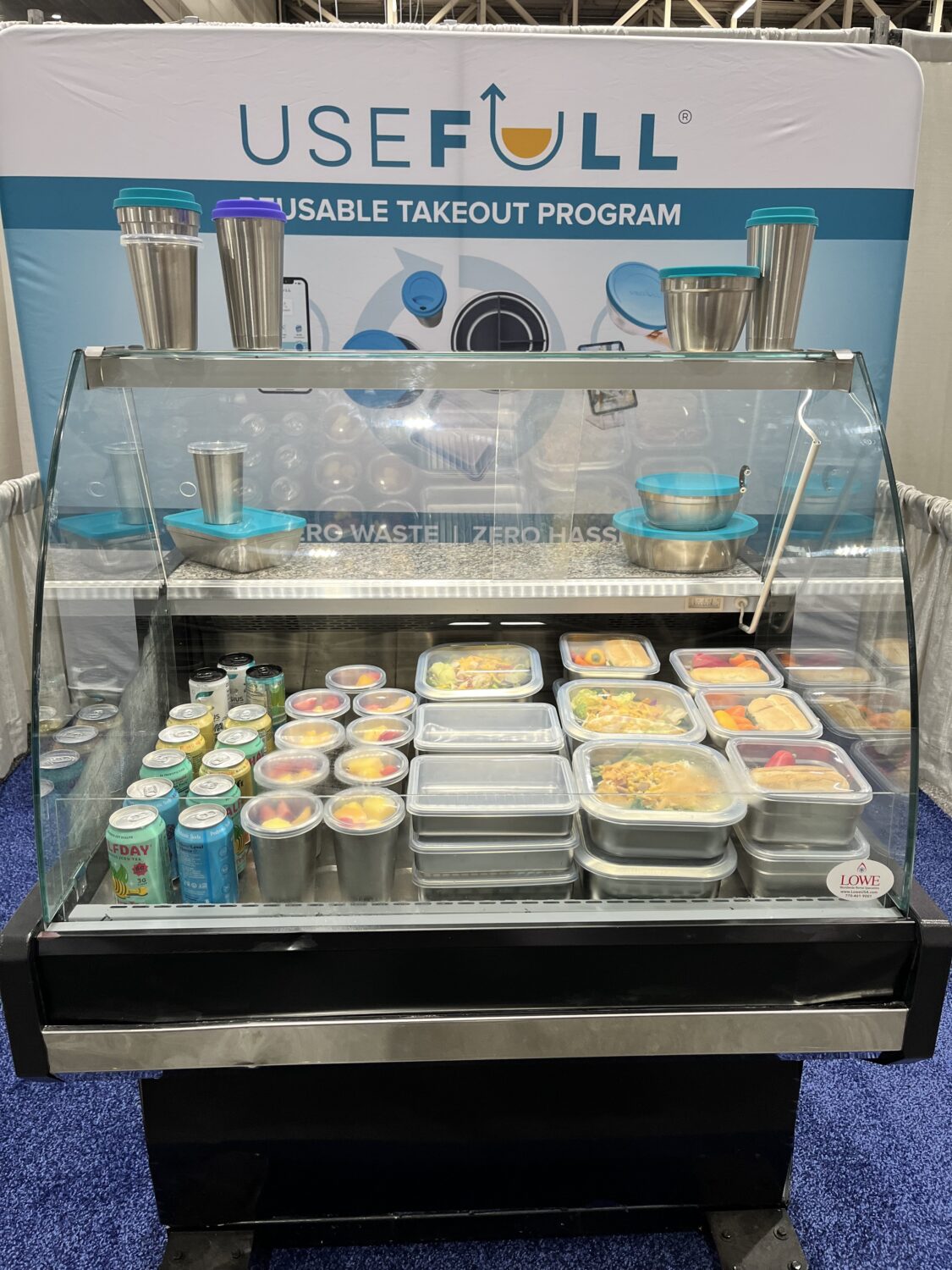
One of the most encouraging developments is that students are often among reuse’s strongest advocates. Many arrive on campus already carrying reusable water bottles and coffee mugs. They’re accustomed to sustainability initiatives and increasingly expect universities to reduce unnecessary waste.
When reuse systems are simple, convenient, and integrated into campus life, participation becomes remarkably natural. The goal isn’t to ask students to care more. It’s to make the sustainable choice the easiest choice.
Why plastic-free matters
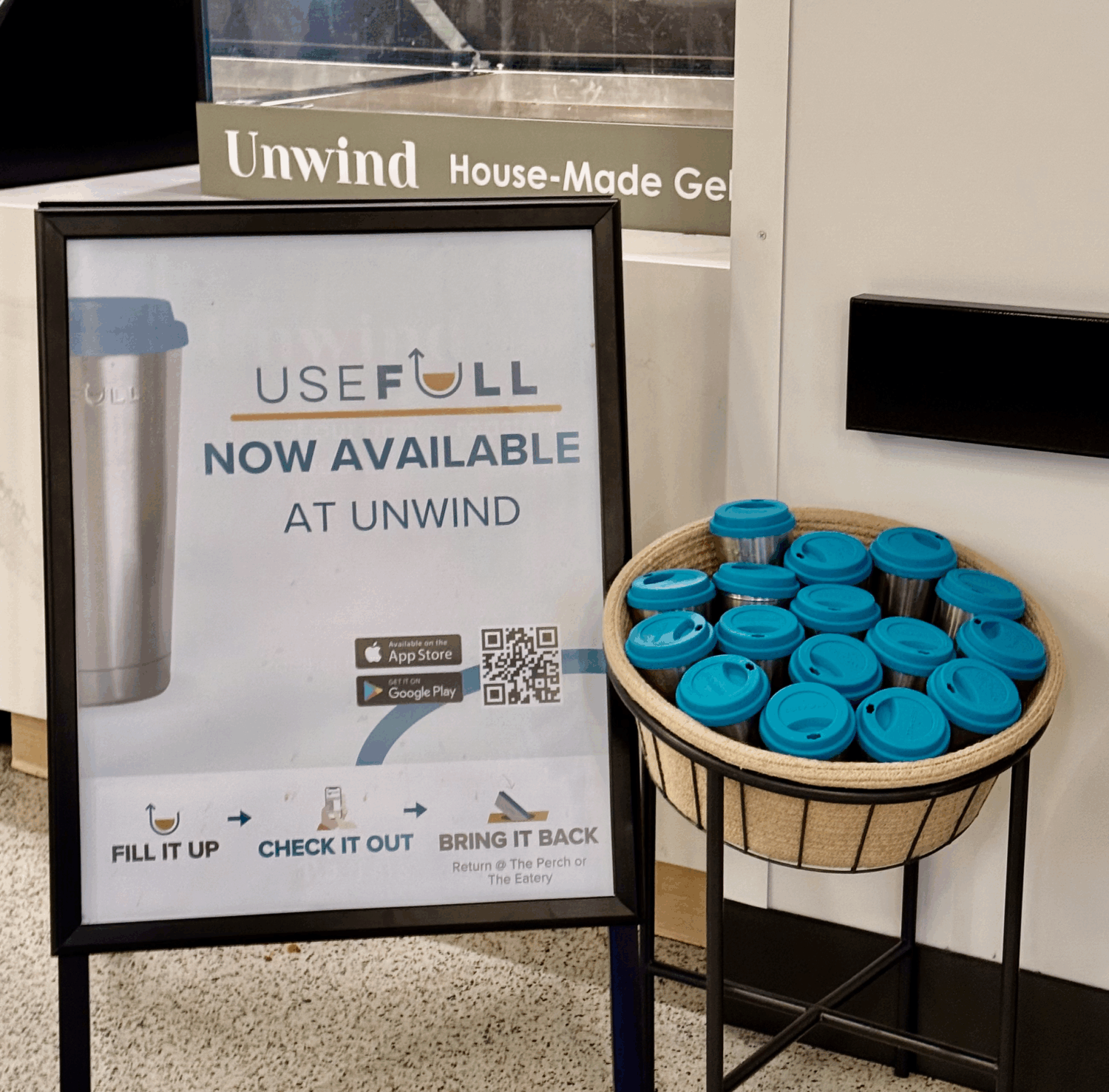
Not all reuse systems are the same. Many reusable food containers remain plastic. At USEFULL, we’ve taken a different approach by designing our system around durable stainless steel foodware. That reflects a simple philosophy: If the goal is to reduce unnecessary plastic in food service, replacing single-use plastic with reusable plastic doesn’t solve the problem.
Plastic-free reuse addresses two important objectives at the same time:
- Reducing disposable waste
- Reducing plastic food contact
Reuse is an operational strategy, not just a sustainability initiative
Perhaps the biggest misconception about reuse is that it’s primarily an environmental program. In reality, successful reuse depends on operations. The strongest systems are designed around:
- Convenient distribution
- Simple returns
- Efficient washing
- Inventory management
- Accountability
- Integration with existing dining operations
The container itself is only one part of the solution. The system surrounding it determines whether reuse succeeds. This is why some programs thrive while others struggle. The most successful institutions don’t simply purchase reusable containers; they redesign the dining experience around reuse.
The future of campus dining is preventing waste
For years, sustainability efforts focused on managing waste better. Today’s leading campuses are beginning one step earlier. They’re asking how waste can be prevented before it’s created. That’s where reuse offers something fundamentally different. Rather than improving what happens after a container is discarded, reuse changes whether that container becomes waste at all. For many colleges and universities, that’s proving to be the more durable and more practical path forward.
From strategy to measurement
Understanding why campuses are moving toward reuse is only part of the story. The next question is equally important: How do you know whether a reuse program is actually succeeding?
The answer goes beyond counting containers or measuring waste diversion. Leading institutions are beginning to track participation, return rates, operational performance, cost stability, and other indicators that show whether reuse is becoming part of everyday campus life.
That’s why we’ve identified Six Metrics Every Campus Should Track to Measure Dining Sustainability, a practical framework for evaluating whether a reuse program is delivering meaningful environmental and operational results.
Frequently Asked Questions
Are compostable containers better than plastic?
In many situations, compostable containers offer environmental advantages over conventional plastic. However, they remain single-use products and often require access to commercial composting infrastructure to achieve their intended environmental benefits.
Why are colleges moving toward reuse?
Many campuses are looking to reduce waste, improve operational resilience, respond to student expectations, create more predictable purchasing, and reduce plastic food contact while advancing broader sustainability goals.
What are the benefits of plastic-free reuse?
Plastic-free reuse can help campuses reduce disposable packaging, eliminate plastic food contact, improve operational consistency, create more predictable long-term costs, and support a circular approach to campus dining.
Is reuse practical for retail dining?
Yes. Modern reuse systems are increasingly designed for cafés, markets, mobile ordering, and grab-and-go environments where convenience is essential. Successful programs integrate distribution, returns, washing, and tracking into existing dining operations.
How does reuse differ from compostables?
Compostables improve what happens after a container is discarded. Reuse seeks to prevent the container from becoming waste in the first place. While both have roles to play, many institutions now see reuse as the more sustainable long-term operating model wherever practical.