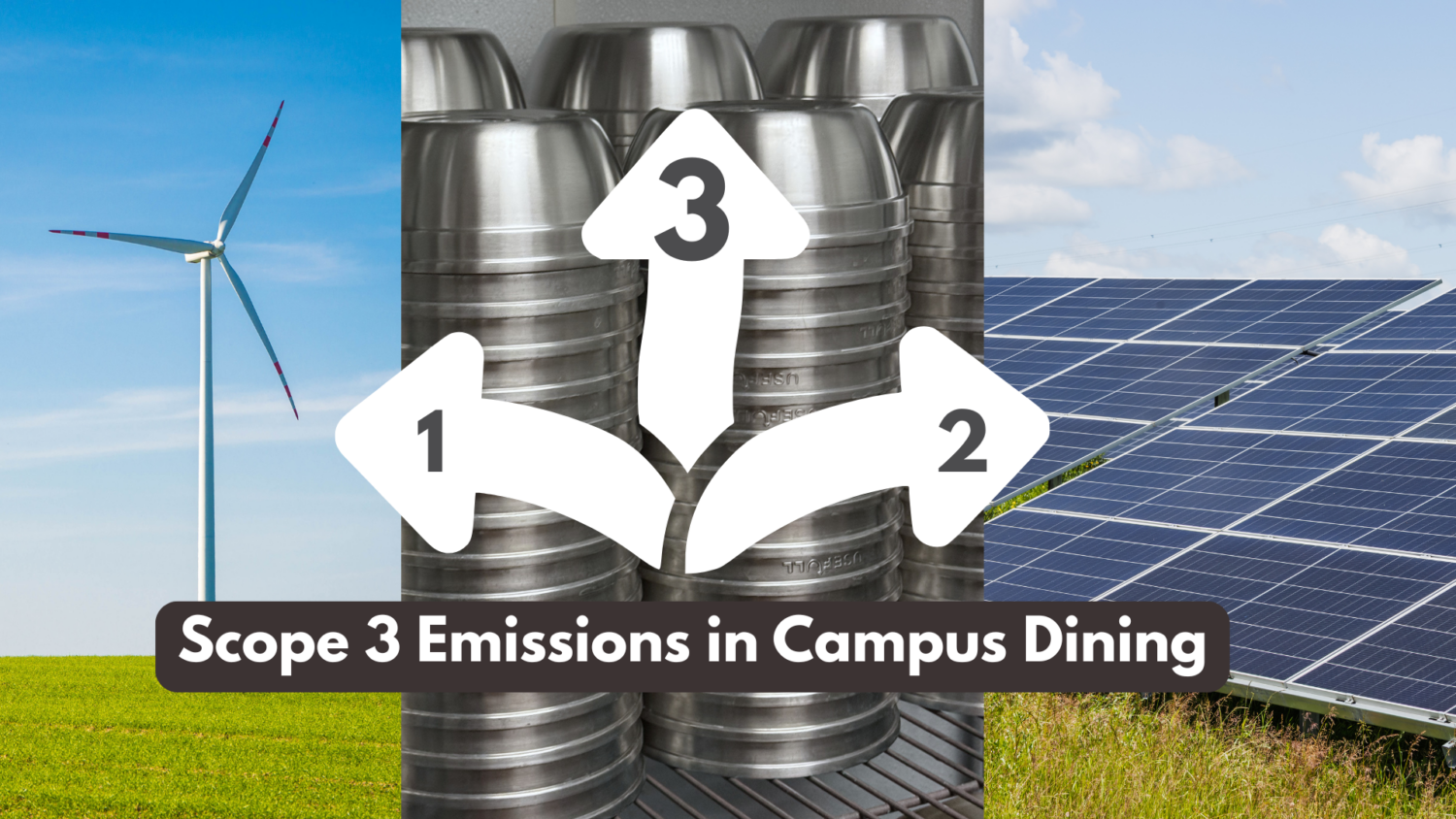
As more colleges and universities begin tracking Scope 3 emissions, a new reality is coming into focus: the majority of a campus dining program’s environmental impact doesn’t come from the kitchen. It comes from the supply chain.
What are scope 3 emissions?
Scope 3 emissions include everything from food production and transportation to packaging and waste. And for many institutions, this category represents the largest and most complex portion of their carbon footprint.
That shift is changing how campuses evaluate everyday decisions, including something as simple as the container a meal is served in.
For years, packaging has been treated as a downstream consideration: something to recycle, compost, or discard. But in a Scope 3 framework, packaging is upstream. It is part of the emissions profile from the moment it is produced, transported, and ultimately disposed of. This is where reuse and material choice for items like takeout containers become critical.
How does reuse affect scope 3 emissions?
Single-use containers, whether plastic or compostable, require continuous manufacturing, distribution, and disposal. Each use carries its own embedded carbon footprint, repeated thousands or millions of times across a campus.
Reusable systems change that equation. By shifting from a linear model (produce–use–discard) to a circular one (use–return–reuse), institutions can dramatically reduce the volume of materials entering their supply chain in the first place.
But not all reuse systems are equal. Container materials matter.
What kind of reusable packaging is best?
Plastic containers, even when reused, can degrade over time, require replacement, and contribute to microplastic exposure concerns. Compostables, while often positioned as sustainable, frequently depend on infrastructure that doesn’t exist at scale and still follow a single-use lifecycle.
Durable, non-plastic materials like stainless steel introduce a different model. Designed for long-term use, they reduce replacement frequency, eliminate plastic exposure at the point of use, and significantly lower the total number of containers required over time.
In a Scope 3 world, this distinction is important. The question is no longer just: What happens to this container after use? It’s: How many times does this container need to exist to positively impact waste and emissions data? As campuses and their dining partners gain better visibility into Scope 3 emissions, decisions around reuse systems and materials will become more strategic.
Beyond sustainability reporting, reuse done correctly with the right materials fundamentally reduces the emissions footprint of campus dining.